
Written by Jason, Office Renovation Contractor at TF Renovation
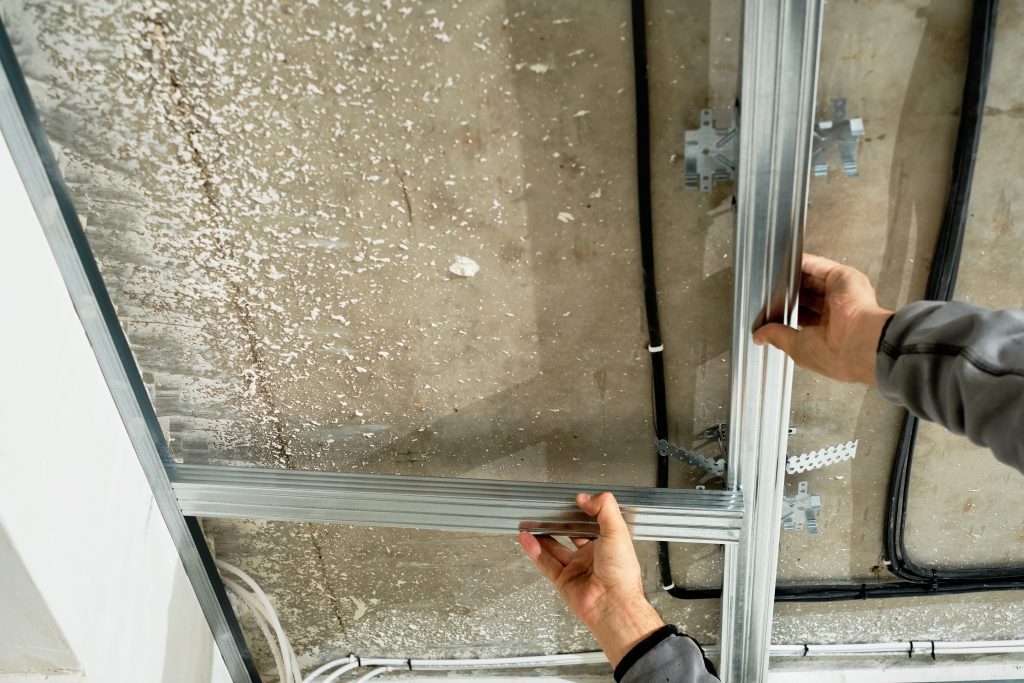
Fire-rated partitions use 5/8-inch Type X or Type C drywall within tested wall assemblies to provide 1 to 4 hours of fire resistance. These systems are designed to slow fire spread and maintain structural integrity. In contrast, standard 1/2-inch drywall offers limited fire resistance, typically around 30 minutes, and is used for general interior applications without a certified fire rating.
Fire-rated drywall is not fireproof. It does not stop a fire completely, but it slows it down, giving occupants time to evacuate and firefighters time to respond.
This protection only works as part of a complete, tested system. A single sheet is not enough. The full assembly, including studs, insulation, sealants, and proper spacing, must work together, or the fire rating can be compromised.
So what separates fire-rated partitions from standard drywall? There are five key differences to understand.
1. Fire Ratings Are About Time, Not ``Fireproof``
Let’s clear up the biggest misconception first: no drywall product is truly fireproof.
A fire-resistance rating measures how long a building assembly can maintain its ability to confine a fire, continue performing a structural function, or both. It’s a time window typically 30 minutes, 1 hour, or 2 hours, designed to give occupants time to evacuate and allow firefighters to work.
Standard drywall offers very limited fire resistance. It will eventually fail under sustained heat exposure, and when it does, it fails fast. Fire-rated assemblies are engineered to dramatically slow that process down.
2. The Science Behind Fire-Resistant Gypsum
Gypsum (CaSO₄·2H₂O) contains approximately 50% chemically combined water by volume. When exposed to fire, heat triggers a process called calcination, and the water locked inside the gypsum core is driven off as steam. That conversion absorbs thermal energy and keeps the unexposed side of the wall significantly cooler, for as long as there is crystalline water left to release.
Standard drywall goes through this same process, but once the water is gone, large cracks form across the core. Think of the cracking pattern on a dried-out lake bed. Those cracks let hot gases pass through, and the panel fails quickly.
Type X drywall addresses this with glass fiber reinforcement. The fibers act as a structural skeleton within the core, reducing the severity of cracks and extending how long the panel holds together after calcination begins.
Type C drywall goes further. It contains a higher concentration of glass fibers and adds vermiculite, a mineral that expands when exposed to high temperatures. That expansion counteracts gypsum shrinkage at joints and seams, keeping the assembly more dimensionally stable for longer. In a controlled demonstration conducted by CGC at 1,580°F (860°C), a Type C panel continued to resist fire for over two hours compared to 57 minutes for Type X under the same conditions.
3. Material Specifications: Standard vs. Type X vs. Type C
Each board type has a defined role:
Standard Drywall
- Typically 1/2-inch thick
- General residential and commercial interior use
- No reinforced core; limited fire resistance
Type X Drywall
- Usually 5/8-inch thick (though 1/2-inch Type X products exist for specific assemblies)
- Glass fiber-reinforced core
- Defined by ASTM C1396 [1]; generally achieves a 1-hour fire rating for 5/8-inch boards in tested assemblies, or 45 minutes for 1/2-inch boards
- The standard choice for most fire-rated wall assemblies
Type C Drywall
- Available in 1/2-inch or 5/8-inch
- Enhanced formulation: more glass fiber plus vermiculite [2]
- Exceeds Type X requirements. 5/8-inch Type C can substitute for 5/8-inch Type X in most designs, but the reverse is never true [3]
Installation Considerations
Type X drywall is significantly heavier than standard drywall. A typical 5/8-inch Type X sheet weighs about 70–90 lbs [4], compared with 50–60 lbs for a 1/2-inch standard board. Because of this added weight, ceiling installations often require mechanical drywall lifts, and wall installations may require additional crew members for safe handling.
How to Identify Fire-Rated Drywall
During installation or inspection, several indicators help confirm the correct material is being used:
- UL or ULC markings are printed along the tapered edge of the board
- Visible glass fibers at cut edges or outlet box openings
- Manufacturer color coding, such as pink face paper used by some brands to identify fire-rated boards
These identifiers help ensure the installed board matches the tested fire-rated assembly specifications.
At a Glance: Drywall Performance Comparison
| Feature | Standard Drywall | Type X (Fire-Rated) | Type C (Enhanced) |
| Typical Thickness | 1/2″ | 5/8″ | 1/2″ or 5/8″ |
| Core Additives | None | Glass Fibers | Fibers + Vermiculite |
| Weight (per sq ft) | ~1.6 lbs | ~2.2 lbs | ~2.3 lbs |
| Acoustic (STC) | Low (~30–34) | High (~36–39) | Highest |
| Price Point | $ | $$ (+25%) | $$$ (+50%+) |
4. Fire-Rated Walls Are Systems, Not Just Boards
This is the point that catches many people off guard. Screwing a sheet of Type X drywall onto a standard wood-stud wall does not automatically create a fire-rated partition. A fire-resistance rating applies to the entire tested assembly, with all components working together exactly as specified during the original fire test [3].
For this reason, fire-rated wall systems are referenced by UL or ULC design numbers (such as UL Design U305 for a typical 1-hour wood-stud wall). These listings define the exact materials and installation details required to achieve the certified fire rating.
Key Components of a Fire-Rated Assembly:
- Specified Gypsum Board: The wall must use the exact board specified (typically Type X or Type C).
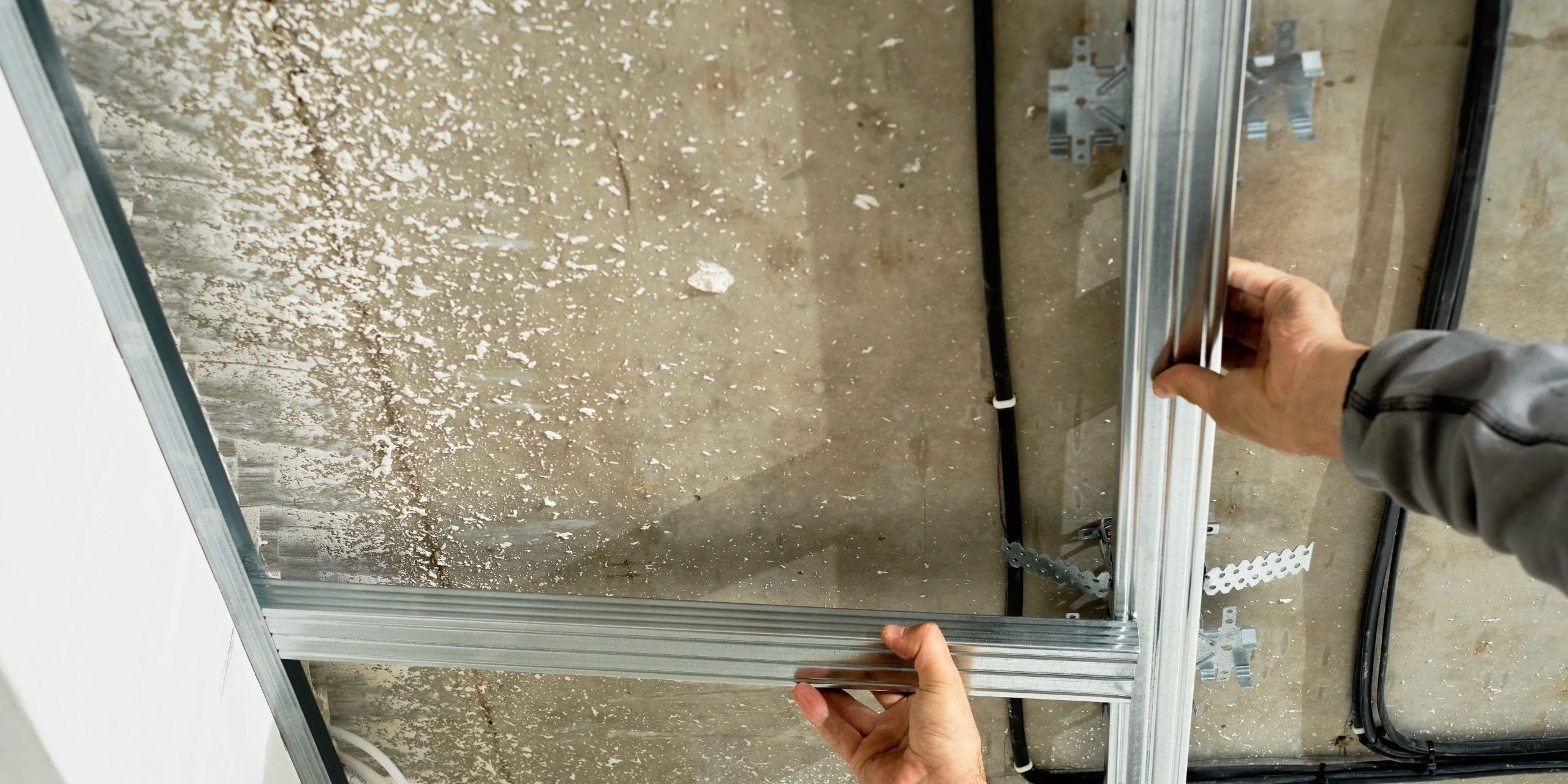
- Fastener Precision: Fastener type and spacing must match specifications (often 8″ or 12″ on center) to prevent the drywall from detaching as heat weakens the material [2].
- Fire-Taping and Finishing: Joint treatment is part of the rated system. To maintain a 1-hour rating, joints must be taped and finished with at least two coats of compound. Screw heads must also be covered to prevent heat transfer directly to the metal fasteners.
- Cavity Insulation: Materials such as mineral wool or stone wool are often required within the stud cavity to slow heat transfer.
- Integrity at Penetrations: Openings for electrical boxes must be protected using fire-rated sealants or putty pads. Even a small unsealed opening can allow smoke and flames to bypass the barrier.
Why Compliance Matters
Swapping or omitting a single component, skipping mineral wool, altering fastener spacing, or using the wrong board type means the assembly no longer carries its tested fire rating and will likely fail building inspection.
5. Code Requirements and Where These Partitions Are Required
Building codes specify exactly where fire-rated assemblies are mandatory. Some of the most common locations include:
- Garage-to-dwelling separations: Under IRC R302.6, the garage must be separated from the residence by at least ½-inch gypsum board on the garage side. Where there are habitable rooms above the garage, the ceiling separation requires not less than 5/8-inch Type X gypsum board or equivalent.
- Stairwells and exit corridors: Fire-rated partitions protect egress routes, giving occupants a clear path out during a fire.
- Multi-family tenant separations: Shared walls between units in apartment buildings or condominiums are typically required to carry 1-hour or 2-hour ratings.
- Mixed-use and commercial occupancy separations: Different building uses within the same structure are compartmented with rated assemblies.
Fire compartmentation is a foundational concept in building safety. By dividing a structure into contained zones, rated partitions limit how quickly fire and smoke spread—buying critical time for everyone inside.
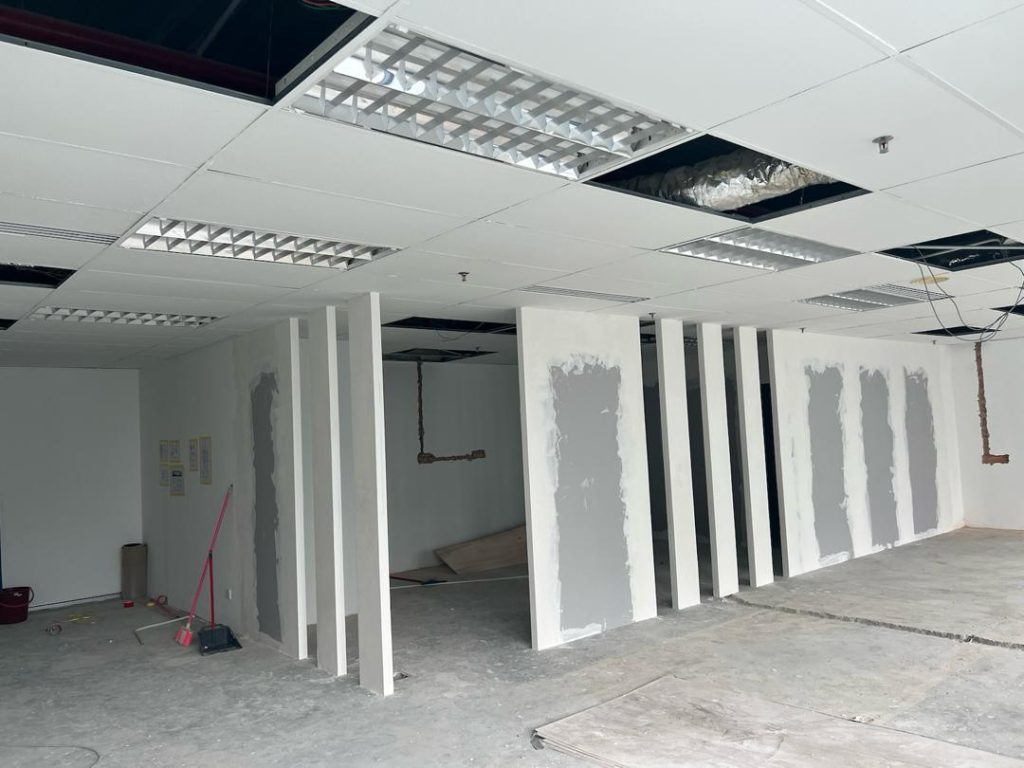
Fire-Rated Partition Installation Examples
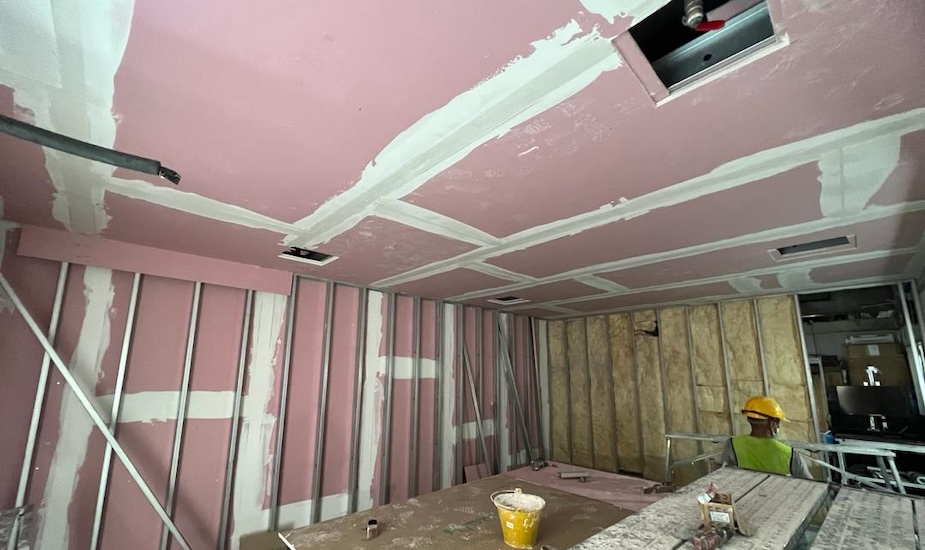

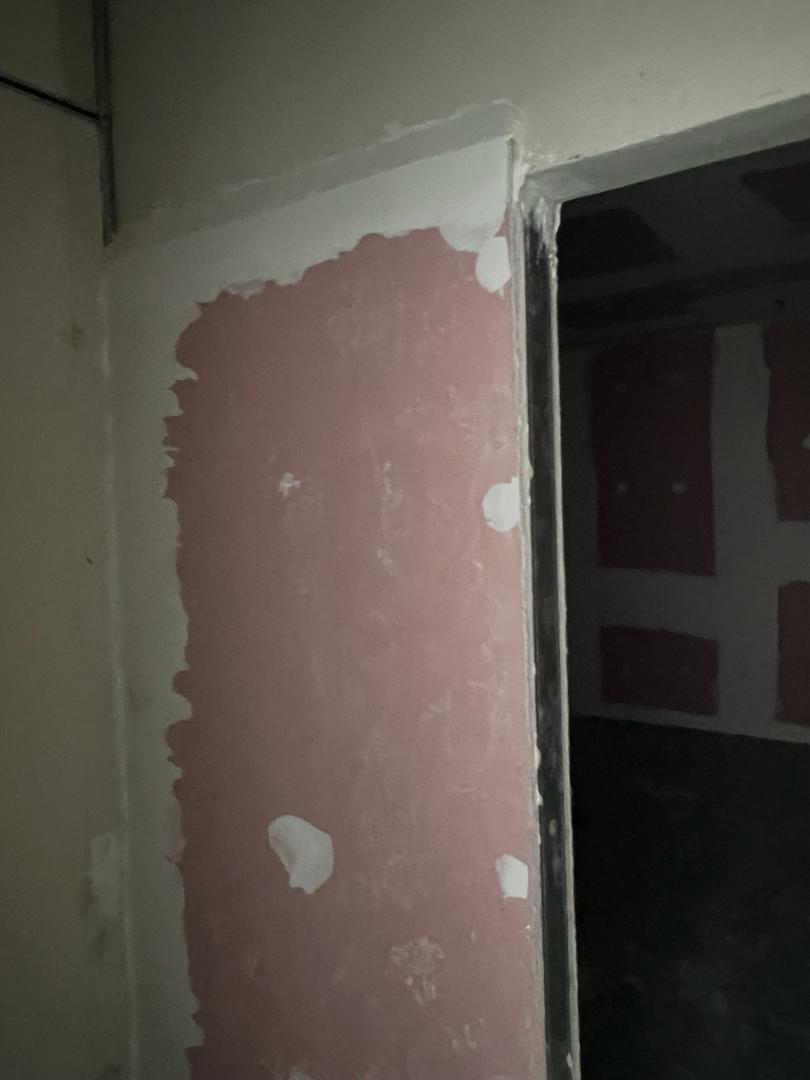
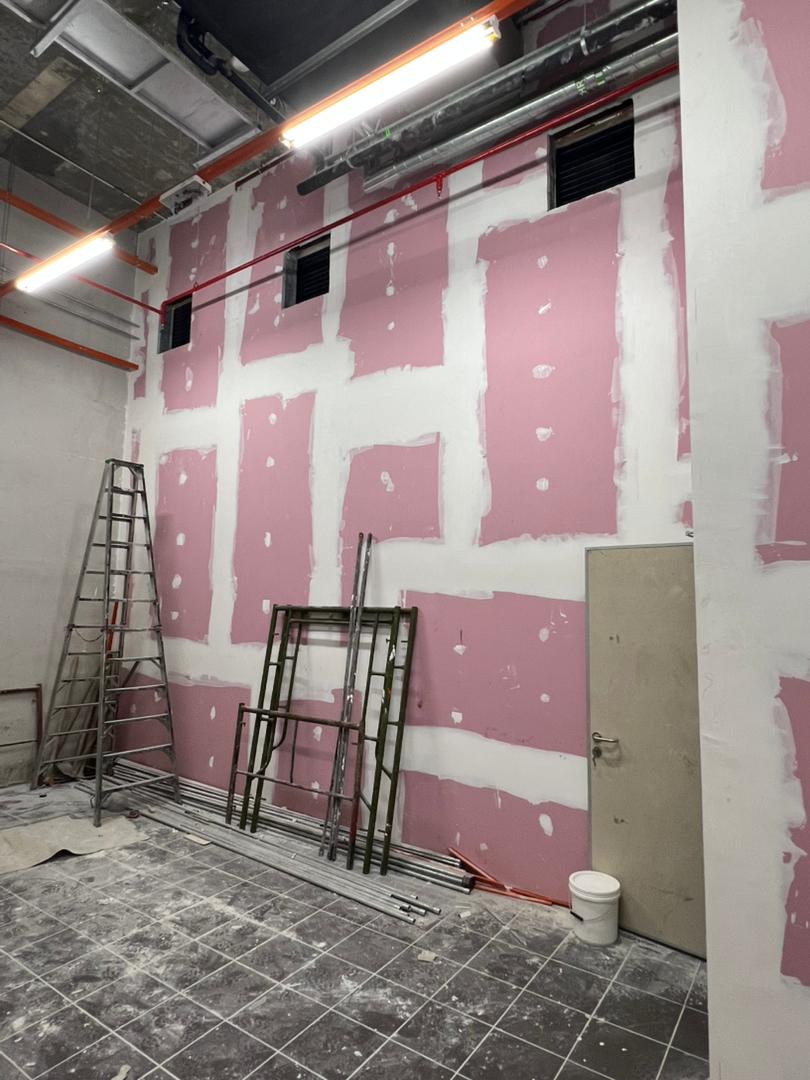
FAQ: Common Questions About Fire-Rated Drywall
Can two layers of standard drywall replace one layer of Type X?
No. Standard drywall lacks the glass fiber reinforcement needed to maintain core integrity during fire exposure. Doubling up the thickness does not replicate the performance of a tested fire-rated assembly.
Which board type should I specify?
A straightforward starting guide:
- Standard drywall: General interior applications with no fire-rating requirement
- Type X: Most fire-rated wall assemblies, garages, corridors, and tenant separations
- Type C: High-rating applications, ceiling assemblies, or wherever a design requires extended fire resistance beyond what Type X provides
Always confirm which board type the project’s specified UL or ULC assembly design requires before ordering materials.
The Bottom Line
Standard drywall and fire-rated partitions look similar on the surface, but they perform very differently when it counts. The difference isn’t just in the board; it’s in the chemistry of the core, the reinforcing fibers and additives, and the precision of the entire tested assembly.
Specifying or installing the wrong product doesn’t just create a code problem. It compromises the protection that fire-rated construction is designed to provide. When in doubt, pull the UL design number, verify every component, and don’t substitute without first checking the tested assembly specifications.
References & Technical Standards
- [1] MS 1093: Fire-Resistant Construction Materials and Assemblies, Department of Standards Malaysia.
- [2] MS 1452: Fire-Rated Gypsum Board Specifications, Department of Standards Malaysia.
- [3] UL Solutions (Product iQ): Guide Information for Fire-Resistance Ratings of Type X/C Gypsum Boards.
- [4] USG Boral Malaysia / Knauf Malaysia / National Gypsum Malaysia: Technical Data & Safety Data Sheets (SDS).
About the Author
Jason is an office-renovation contractor at TF Renovation, a CIDB-certified firm in Malaysia with more than 10 years of experience in office partitioning and commercial reinstatements. He oversees end-to-end renovation projects, ensuring that every build, from standard drywall to fire-rated partition walls, complies with strict safety standards and local building codes.